450ml Portable Ultrasonic Cleaner for Jewelry & Glasses
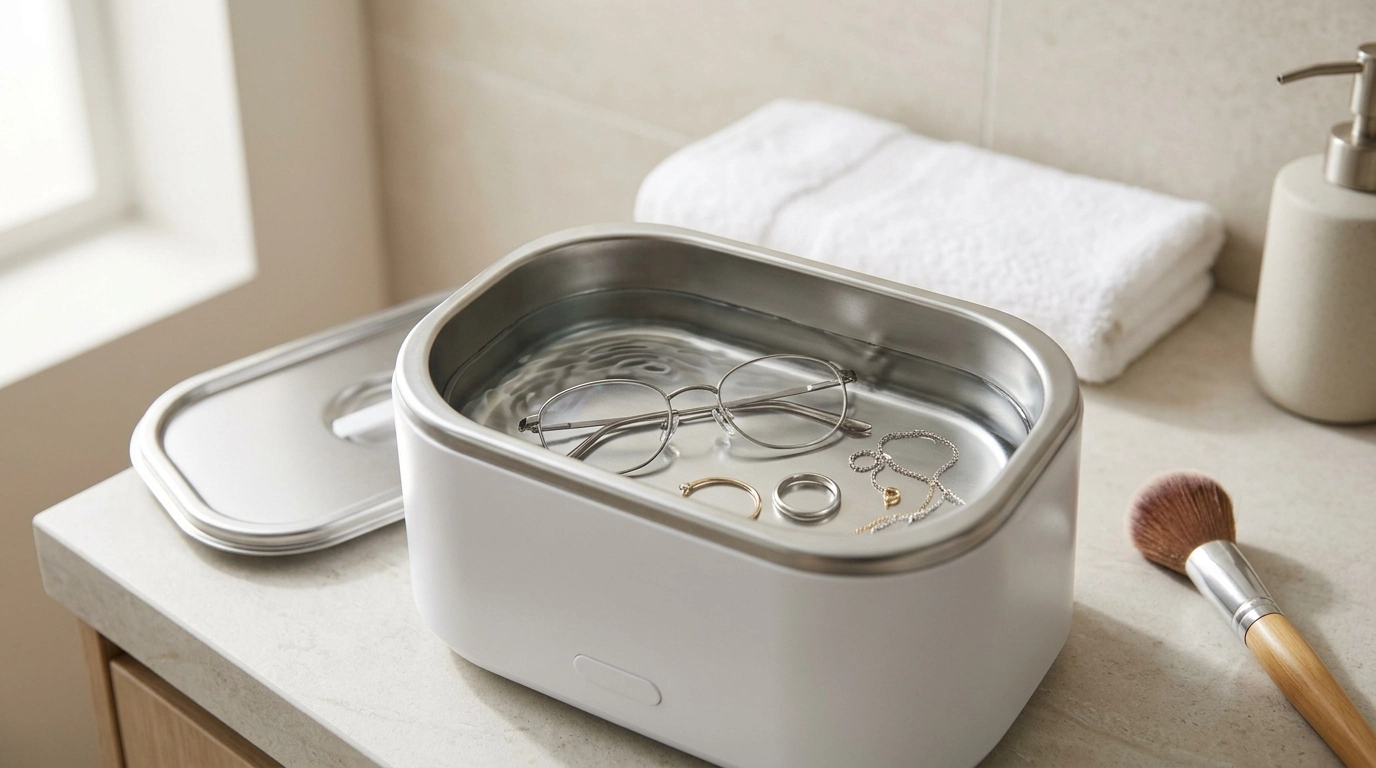
Portable Ultrasonic Cleaner (450ml) for Jewelry, Glasses, and Makeup Brushes
Everyday essentials pick up skin oils, lotion, makeup residue, and airborne dust—especially in the tiny seams and textured surfaces that quick wiping can miss. A compact ultrasonic cleaner uses high-frequency vibrations in water to help loosen debris from crevices, making it a practical, low-scrub way to keep jewelry, eyewear, and brush heads looking fresher between deeper cleanings.
What an Ultrasonic Cleaner Does (and Why It Works)
Ultrasonic cleaning relies on rapid vibrations in a liquid bath that create microscopic bubbles. As those bubbles form and collapse near surfaces, they help lift grime from tight spaces that are hard to reach with cloths or bristles.
- Helps dislodge buildup from small gaps and textured designs without aggressive scraping.
- Targets areas like stone settings, hinge grooves on glasses, and the ferrule area on makeup brushes.
- Offers a hands-off approach that can be gentler than hard brushing (when used appropriately).
- Best results depend on the right liquid, a sensible cycle time, and proper item placement.
450ml Capacity: What Fits Comfortably
A 450ml tank is designed for small personal items that benefit from full immersion without taking up a lot of counter space. It’s ideal for quick single-batch sessions—think a couple of rings, a few earrings, a necklace chain arranged loosely, or one pair of glasses depending on frame size.
To avoid scuffs and improve circulation, don’t pack items tightly. If you regularly wear oversized frames, measure them against the tank’s usable interior space before purchasing to make sure they can sit without forcing or bending.
| Item | How to place it | Suggested approach |
|---|---|---|
| Rings & earrings | Lay flat with space between pieces | Use warm water; add mild dish soap for oils; rinse and dry thoroughly |
| Necklace chain | Loosely coil; avoid knots | Short cycles; check tangles between cycles |
| Glasses frames | Submerge if safe for coating; avoid overcrowding | Use plain water or mild soap; avoid harsh chemicals; dry with microfiber cloth |
| Makeup brush heads | Keep handles out of water when possible | Short cycles; reshape bristles; air-dry fully bristles-down or flat |
Best Uses: Jewelry, Glasses, and Makeup Brushes
Jewelry
Ultrasonic cleaning can help remove skin oils and residue from intricate metalwork, chain links, and some stone settings. Before cleaning, inspect for loose stones, bent prongs, or compromised settings—vibration plus warm water can worsen existing problems. For jewelry-care fundamentals, the Gemological Institute of America (GIA) is a reliable reference point for general guidance.
Glasses
Eyewear collects grime where fingers and skin touch most: nose pads, hinges, and small frame creases. Ultrasonic cleaning can lift buildup in those hard-to-reach areas, but lens coatings and certain adhesives may not be suited for immersion. If unsure, check brand recommendations and follow best-practice care tips from the American Optometric Association.
Makeup brushes
Dense brush heads can trap product deep inside the bristles. Ultrasonic action helps loosen that buildup so rinsing is faster and less abrasive. The key is minimizing water exposure to handles and glued ferrules, and using shorter cycles. For broader cosmetics hygiene guidance, the U.S. Food & Drug Administration (FDA) provides general safety information.
Other small items
A compact ultrasonic tank can also be useful for small metal items like watch bands (not the watch head), certain razor heads (check manufacturer instructions), and small metal tools. When in doubt, test a short cycle first and inspect the finish.
How to Use a Portable Ultrasonic Cleaner Safely
- Fill the tank to the recommended level and never run the unit without liquid.
- Use lukewarm water to help with oil removal; avoid very hot water that may affect coatings or adhesives.
- Add only a small amount of mild dish soap when needed; avoid bleach, strong acids, or flammable solvents.
- Place items so they don’t rest tightly against each other; water movement improves results and reduces scuffing risk.
- Run a short cycle first, inspect, then repeat if needed; rinse afterward and dry completely.
What to Avoid Cleaning Ultrasonically
Ultrasonic cleaning is powerful, which is exactly why some items should stay out of the tank.
Cleaning Results: Cycle Time, Liquid Choice, and Placement
Care and Maintenance for a Small Ultrasonic Tank
Product Snapshot: Portable Ultrasonic Cleaner – 450ml
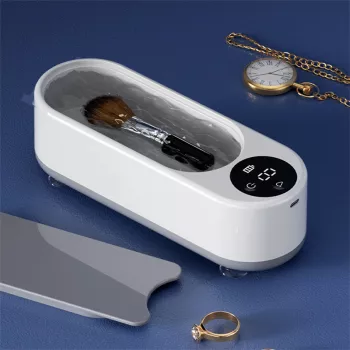
If you want a compact option for routine upkeep, the Portable Ultrasonic Cleaner for Jewelry, Glasses, Makeup Brushes – 450ml Capacity is sized for quick sessions in bathrooms, dorms, and small vanity setups. It works best as a maintenance tool—keeping everyday items fresher between deeper cleaning, repairs, or professional servicing.
For anyone building a consistent cleaning habit, pairing a quick-care device with a simple routine can help. A lightweight planning aid like AI-Powered Productivity: The Smart To-Do List Checklist That Practically Organizes Itself can help you schedule small recurring tasks—like a weekly glasses clean or a brush refresh—so they don’t pile up.
FAQ
Can an ultrasonic cleaner damage jewelry or gemstones?
Many metals tolerate ultrasonic cleaning, but soft or porous gemstones and fragile settings can be at risk. Check the stone type, confirm prongs feel secure, and use short cycles with inspection between runs.
Is it safe to clean eyeglasses in an ultrasonic cleaner?
It can be safe for some frames, but it depends on lens coatings, frame materials, and adhesives. Use lukewarm water with mild soap, choose short cycles, and dry thoroughly—especially around hinges and nose pads.
How should makeup brushes be placed to avoid loosening the ferrule glue?
Position brushes so mainly the bristles are in the water, keeping handles and the ferrule area as dry as possible. Use short cycles, rinse well, reshape bristles, and let them air-dry fully to protect adhesives.



Leave a comment